

Before emancipation, free Black people in much of this country (our ancestors built for free) had to carry papers proving they were free. A stranger, a sheriff, or a slave catcher could demand them at any moment. Our freedom depended on documents other people wrote about us.
This fall, we publish papers we wrote ourselves.
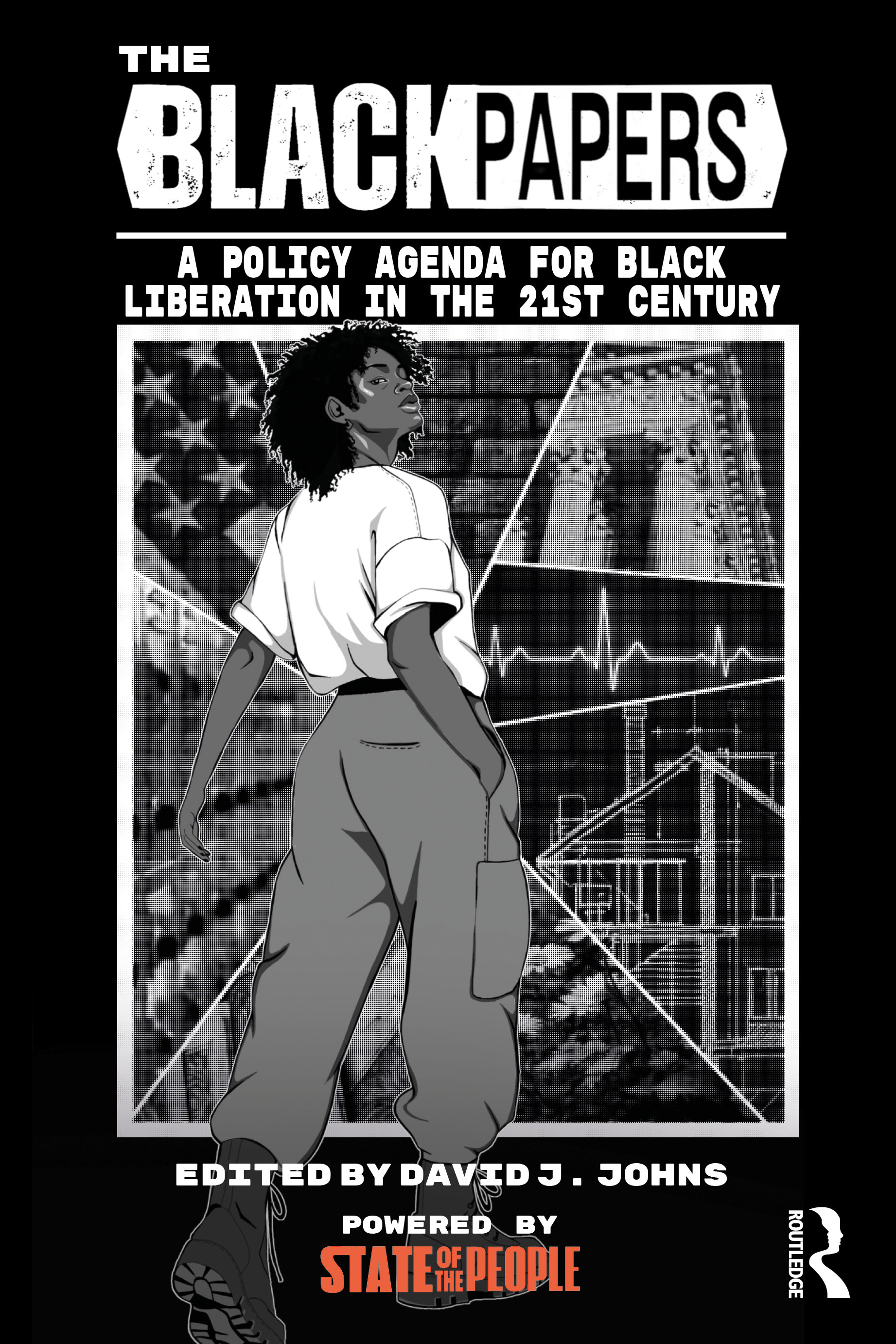
The Black Papers: A Policy Agenda for Black Liberation in the 21st Century arrives from Routledge. It holds 26 chapters written by more than 100 scholars, organizers, policymakers, and artists, and the publisher calls it the most comprehensive Black policy agenda in a generation. I have the honor of editing it.
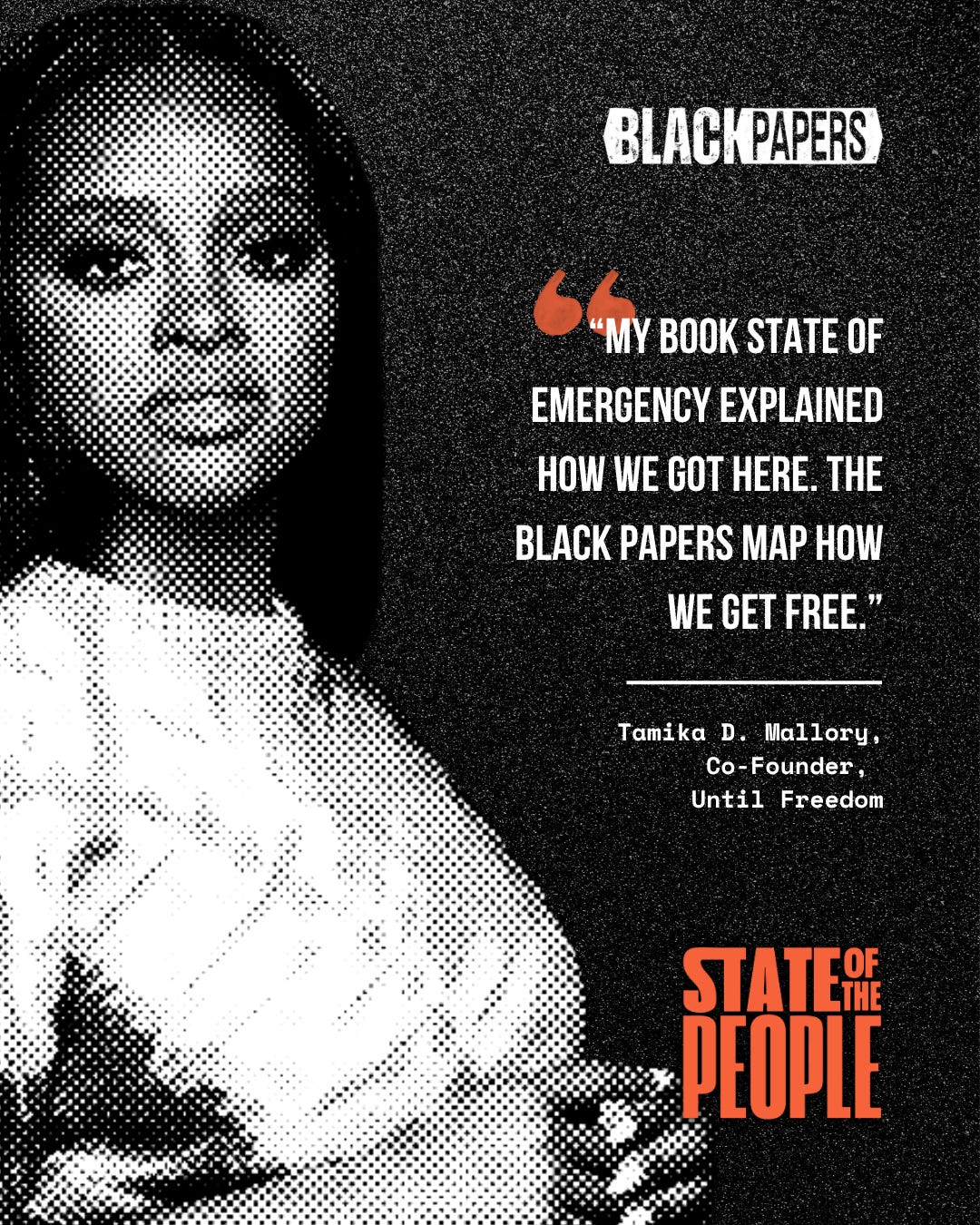
Tamika Mallory read it and said it plainly. The Black Papers “map how we get free”.
Preorders open October 9.
Who has already read them.
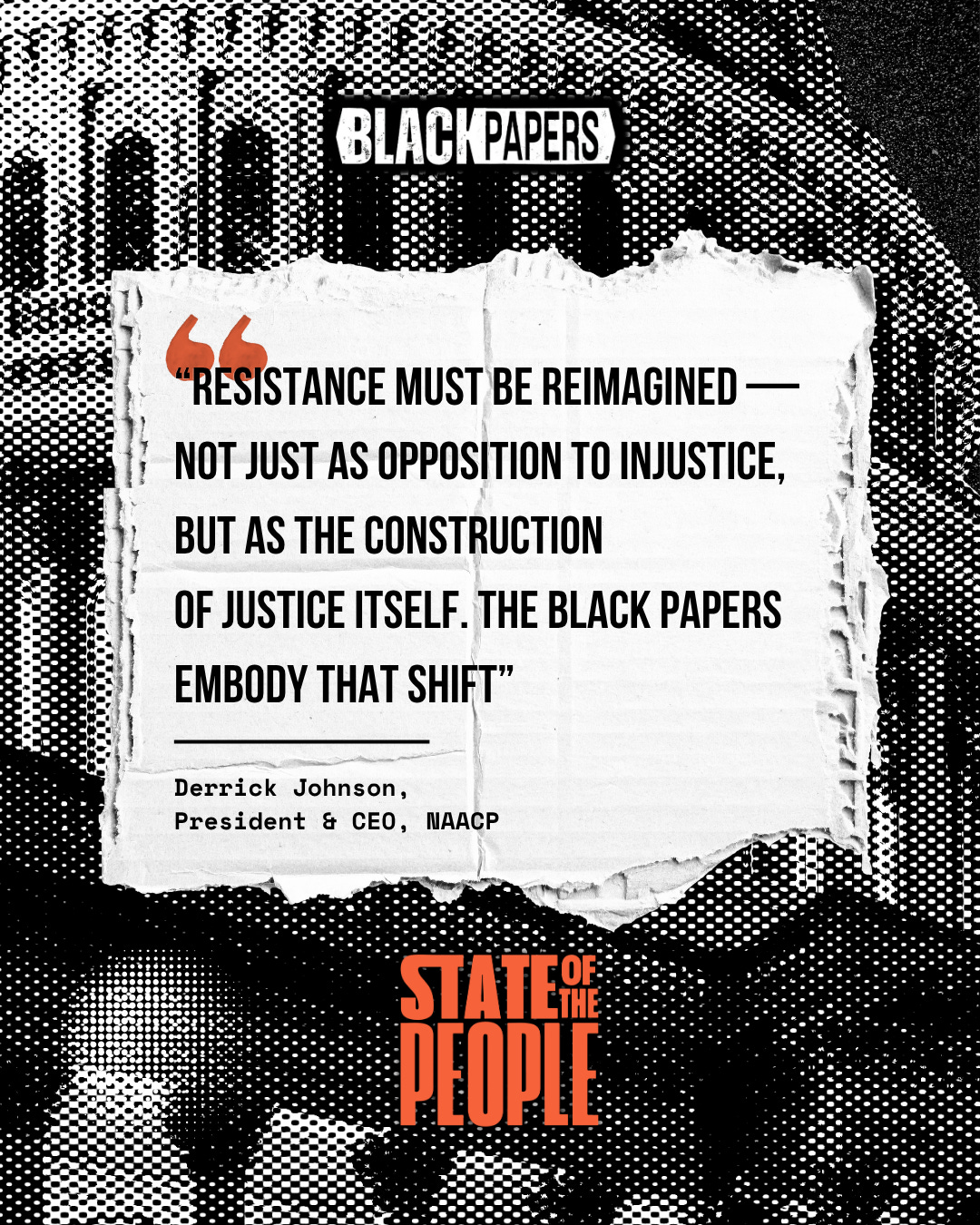
Joy-Ann Reid calls the Papers essential, the work of a new generation of Black thinkers and fighters. NAACP President Derrick Johnson says this moment asks us to build justice, not only oppose injustice, and that the Papers move us from protest to policy. Dr. Kimberle Crenshaw says they carry the lens of intersectionality into every dimension of Black life and chart real pathways to dismantle structural racism.
Brittany Packnett Cunningham calls them the policy handbook our movement has been missing, built by our own people. Melanie L. Campbell, who has led the National Coalition on Black Civic Participation for three decades, says they give our civic power the policy infrastructure it demands. And Dr. Terrell Winder says the way the Papers were made, with policymakers, academics, and organizers at the same table, is a model in its own right.
I’m grateful for every one of them. But the endorsement that matters most is yours.
We have always written our own papers.
On March 16, 1827, Samuel Cornish and John Russwurm published the first Black-owned newspaper in this country. They opened Freedom’s Journal with a sentence I carry with me: “We wish to plead our own cause. Too long have others spoken for us” (Cornish & Russwurm, 1827).
In 1905, W.E.B. Du Bois and a group of Black men met at Niagara Falls and refused the terms this country offered them. In 1968, the Kerner Commission put in writing what Black people already knew: “Our nation is moving toward two societies, one black, one white—separate and unequal” (National Advisory Commission on Civil Disorders, 1968). In 1972, Black people gathered in Gary, Indiana, and wrote their own agenda.
The Black Papers stand in that lineage, and they take on what those efforts left incomplete: sustained infrastructure for our collective liberation.
The Papers open with democracy. On purpose.
Before a single chapter on wages, schools, housing, or health, the book begins with power.
James Peterson’s “Foundational People Power: Embracing the Challenge to Reclaim Democracy” makes the case that democracy is something we build and reclaim, not something we wait to be granted. LaTosha Brown’s “Architects of Democracy: Reclaiming Voting Rights and Reimagining America” shows us how.
LaTosha shared an excerpt last week, and it is a call to arms. She names the SAVE Act, which would require proof of citizenship to register to vote. Once again, Black people would have to show papers. She warns it can fall hardest on naturalized citizens, low-income voters, and elders without the right documents. Then she goes on offense. She proposes a Department of Democracy, independent of whoever holds the White House, much like the Federal Reserve, with authority to set minimum standards for ballot access and to oversee redistricting (Brown, 2026).
She sends us home, too: to local election boards, to poll worker sign-ups, and to community circles and Saturday schools in the tradition of the freedom schools.
Her line I keep returning to: “American citizens are the architects of democracy, not just mere participants” (Brown, 2026).
Every other Paper depends on that one. A policy agenda without the power to enact it is a wish list. Democracy is the umbrella under which every other Paper exists.
As bell hooks reminds us, democracies must be defended with each generation, and education is its midwife.
#TeachTheBabies
Where to go next.
We carried these Papers across 13 cities on the State of the People POWER Tour. Everywhere we went, people told me they were tired and overwhelmed, and unsure where to direct their righteous rage. Tired people don’t need another hot take. They need a plan they can hold in their hands. After the democracy Papers, here are three places to start.
Education. I spent my career in rooms where decisions about Black children were made without them, including as the first Executive Director of the White House Initiative on Educational Excellence for African Americans. The education Papers run from early care through higher learning, including “Beyond Protest, Toward Power: K-12 Education and Thriving Black Students in America”.
Economics. Jessica Fulton, Jeffery T. D. Wallace, Jr., Alphonso David, Lawrence “Larry” Parks, and Tim Simons lay out “Building an Economy That Works for Us: The Black Economic Vision.” Fred Redmond shows how Black workers and unions are building economic justice right now.
Health. The Paper is called “Five Years Lost: Confronting America’s Black Health Equity Crisis.” Nationally, Black Americans can expect to live 74 years, more than four years fewer than white Americans (KFF, 2026). Those are birthdays, graduations, and grandchildren we don’t get to hold. The Paper turns that loss into demands.
Your elders need these Papers too.
When Deesha Dyer came to class, the first thing she asked of us was to teach our elders about disinformation. She had to block her own grandmother on Facebook.
The Black Papers are a tool for exactly that work. Bring the democracy Papers to Sunday dinner. Read them aloud in your book club, your church group, your classroom. Hand them to the person in your family who keeps forwarding you nonsense. Sit with them, and show them what the Papers say.
The midterms are November 3. Every candidate asking for your vote should have to answer to what’s in these Papers.
Do these three things, in this order.
Subscribe to this Substack. You’ll find launch news, events, and where we’ll be next here.
Follow @NBJCOntheMove and @StateofthePPL. That’s where the conversation continues between posts.
Mark October 9. That’s the day preorders open for The Black Papers. Buy one for yourself and one for the young person in your life who keeps asking what we’re supposed to do now.
For generations, this country demanded our papers. Cornish and Russwurm answered in 1827. Niagara answered in 1905. Gary answered in 1972. Now we have written our own Papers... and it’s our turn to carry them to the ballot box and beyond.
References
Brown, L. (2026, September 16). LaTosha Brown: It’s time for a Department of Democracy [Op-ed]. NewsOne. https://newsone.com/6871830/latosha-brown-essay-department-of-democracy/
Cornish, S. E., & Russwurm, J. B. (1827, March 16). To our patrons. Freedom’s Journal, 1(1), 1.
KFF. (2026, March 9). Racial disparities in life expectancy. https://www.kff.org/racial-equity-and-health-policy/racial-disparities-in-life-expectancy/
National Advisory Commission on Civil Disorders. (1968). Report of the National Advisory Commission on Civil Disorders. U.S. Government Printing Office.