Love. Is. Present.
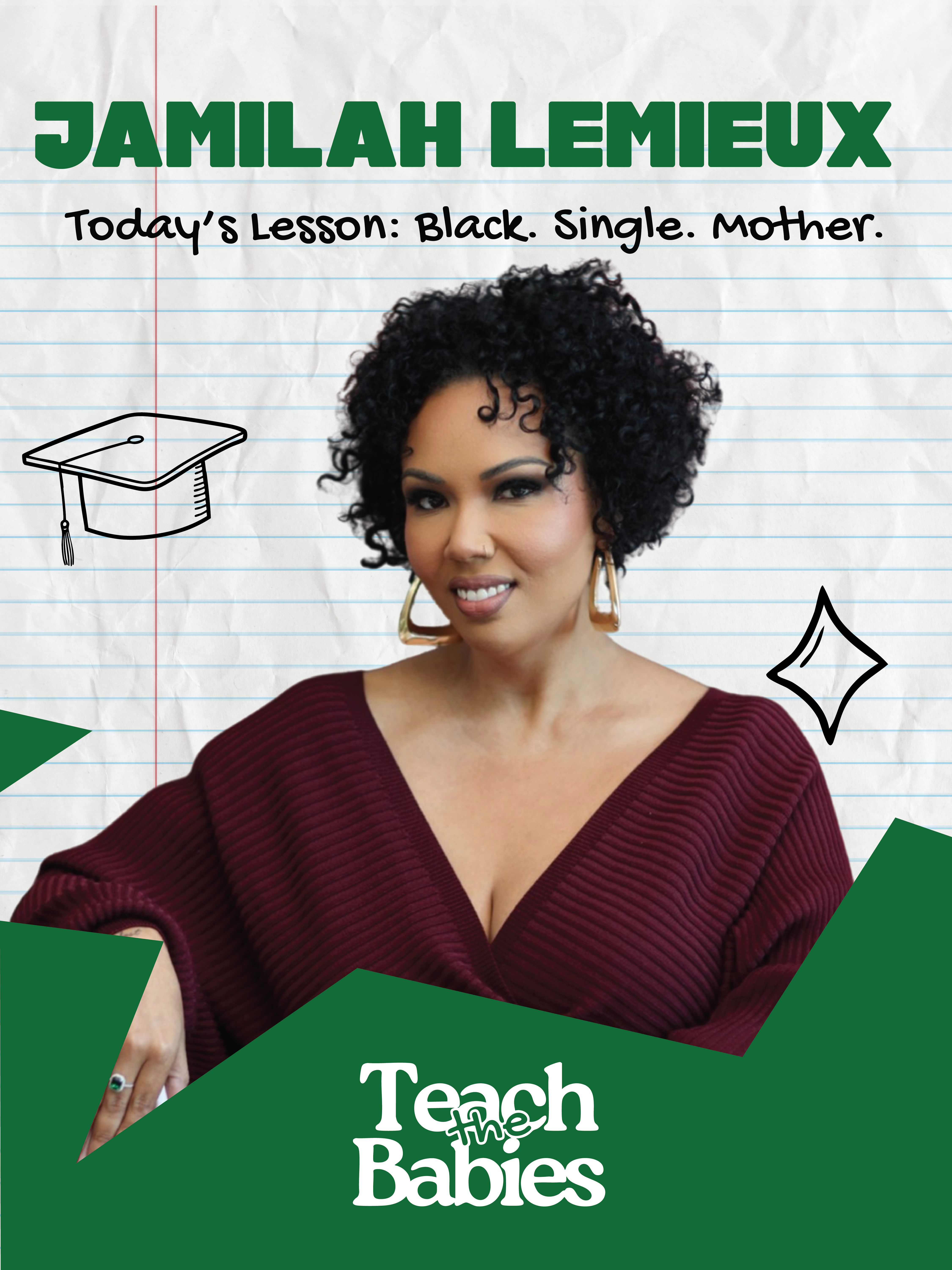
Jamilah Lemieux wrote the book Toni Morrison told us to write. Here’s what happened when the class got in the room with her.

There’s a Train Memory I Carry.
A few years back, Jamilah Lemieux, Mini Milah, and I boarded a train from New York to Connecticut. We were going to advocate for equity, for reproductive justice, for the humanity of people this country works overtime to dismiss. And the whole ride up, the three of us talked about cartoons and games and dreaming.
We did our thing at the Capitol. Made the case. And after the panel, Mini Milah and I raced each other. She won.
I want to be specific about that. We raced. A child who carries her mother’s brilliance in her bones, full sprint, no apology, already knowing she could win. She has always been special. Brilliant and beautiful. Both of them have.
So when I say I’m proud of Jamilah Lemieux, I need you to understand that I mean it in the way people who have watched someone up close mean it. Not as a professional courtesy. Not as a platform endorsement. As a friend who has seen her show up—in panels, in print, in parenthood—and do it with more grace and fire than most people can sustain in any one of those arenas, let alone all three at once.
Aunt Toni Told Us to Write the Books We Need.
Jamilah did that.
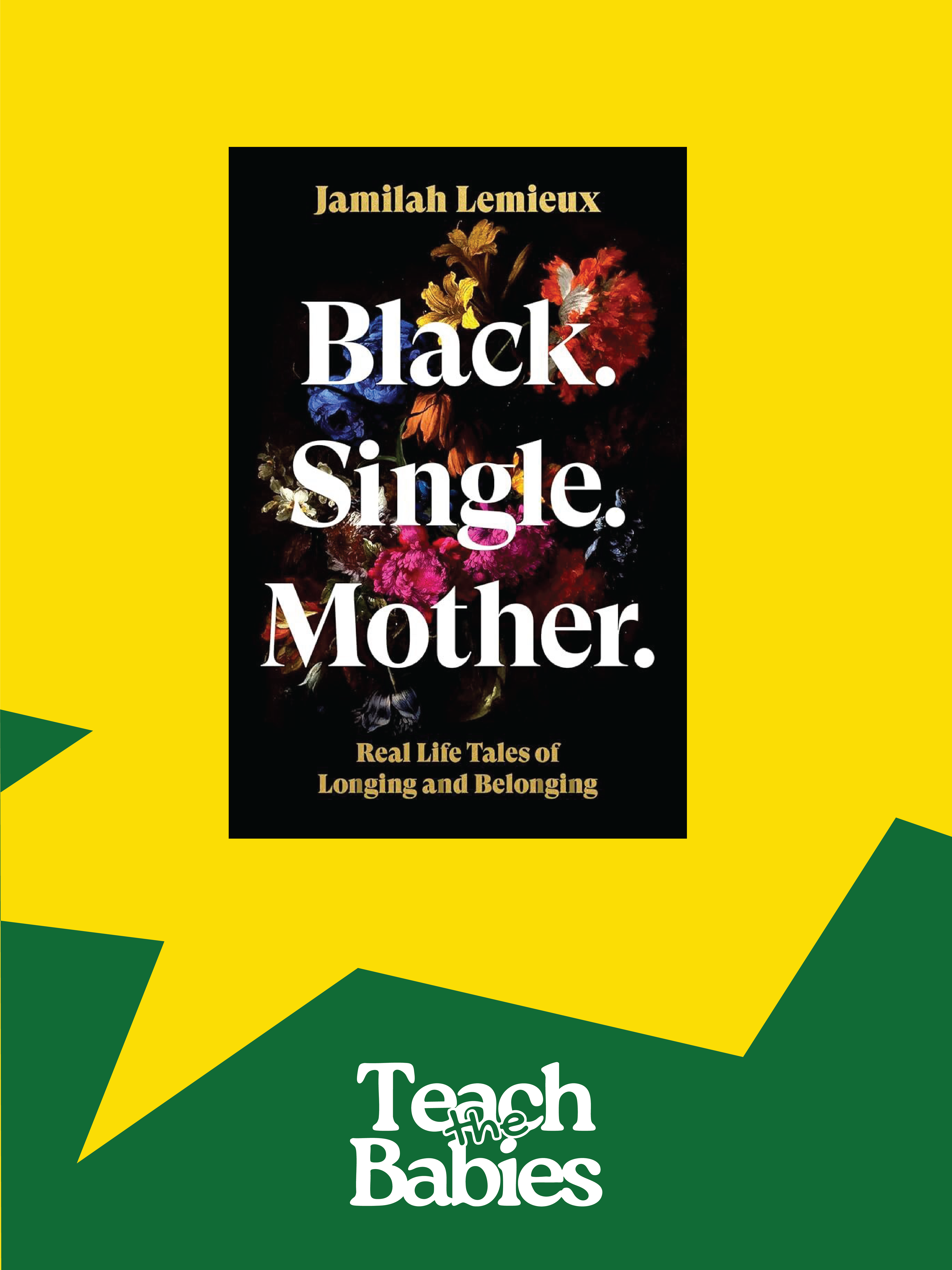
“Black. Single. Mother.: Real Life Tales of Longing and Belonging” was published in March 2026. And it is already doing exactly what the best books do: making people uncomfortable in the most clarifying ways. The title alone does something. It stops you. Those three words, each one punctuated, each one demanding to be taken seriously on its own terms, before you even get to the subtitle. That is intentional. That is Jamilah.
The architecture of this book is stunning. It is part personal memoir, part cultural excavation. Jamilah weaves her own story alongside 23 other Black single mother voices—including a poem by Staceyann Chin that opens something in you before you even get to the chapters. The range is deliberate. Black mothers from different class backgrounds, different regions, different family configurations, different relationships to faith, co-parenting and ambition. Queer women. A trans mother raising two children. Women who had no co-parent at all, and women navigating 50/50 custody. The breadth is the argument.
She told me she didn’t start out planning to make it memoir-ish. When she sat down to write, she realized she couldn’t speak honestly about Black single motherhood without speaking about her mother’s experience, and then her own. And once she did that, she knew the book needed more voices—because her story, as real as it is, carries a certain privilege relative to many of the women she writes about. Light complexion. College-trained. Professional career. An active, equally involved co-parent. These are not universal conditions. The book honors that.
The Book Begins at the Plantation. Not by Accident.
Before Jamilah gets to Moynihan, before she gets to Reagan’s “welfare queen,” before she names the cultural shorthand of “baby mama” and the shame it was designed to deliver—she takes us back further. To enslaved women who did not choose their partners, who were forced into maternal roles under conditions no language is adequate to describe, and who still built something. Who still loved. Who still made community from catastrophe.
That is where the lineage of Black single motherhood begins in this country. Not with dysfunction. With survival under conditions designed to make survival impossible.
Daniel Patrick Moynihan’s 1965 report—The Negro Family: The Case for National Action—handed that history a villain. It labeled Black households led by single mothers as a “tangle of pathology.” It positioned Black women as the root cause of Black poverty, rather than what actually caused Black poverty, which was—and remains—systemic racism, economic exclusion, and centuries of state-sanctioned destruction of Black family bonds. The report became policy architecture. It fed Reagan’s “welfare queen” mythology. It built the scaffolding for decades of stigma that Jamilah’s book is deliberately, methodically taking apart.
“Black women were intentionally demonized as the heart of Black dysfunction. What’s wrong with them is us. If we could just stop having babies, the community would be better off. It painted us—and women are always seen as the moral compass.” — Jamilah Lemieux
She names this plainly because it has to be named plainly. You cannot understand the way Black single mothers are treated in this culture without understanding that the treatment was engineered.
Who Gets Protected? Who Gets Punished?
I told her about a dream I had recently. I was in conversation with Nia Long. And at some point, I heard myself say something James Baldwin wrote—about vomiting up the lies that white mediocrity has fed us because they are poisoning us from the inside. And then somehow we were talking about Baldwin’s 1985 Playboy essay, “Freaks and the American Ideal of Manhood,” which he submitted to Walter Lowe Jr., the first Black editor of Playboy magazine—a radical, subversive piece arguing that misguided notions of masculinity were at the root of America’s moral rot. And then we were talking about Jamilah’s book.
This is what Jamilah does to you. She opens portals, even in your sleep.
I asked her about the exceptions. Why does this culture seem to celebrate certain Black single mothers while brutalizing others? She had thought about this. She named Nia Long, who has been a Black single mother in the public eye for long stretches of her career, and yet the stigma never seemed to land on her. She named Taraji P. Henson, who had her son while a student at Howard and built one of the most celebrated careers in Hollywood without it ever being weaponized against her.
And then she said: Cardi B.
Cardi B, who has more money than most of the people who judge her. Who was married at the time of the conception of her children. Who is, Jamilah noted with precision, incredibly articulate and sharp and strategically brilliant—but who speaks like a girl from the Bronx. Because she is. And this culture will not forgive her for that. The class mobility, the wealth, the wit—none of it clears the debt this culture has decided she owes for sounding like herself without apology.
“Nia Long and Taraji have been protected partly because we don’t know a lot about the intimate details of their relationships. And partly, yes, because of respectability politics. But look at Cardi B. She’s got more money than most successful actresses. She was married. She’s smart as a whip. But she speaks like a girl from the Bronx—because she is. And for that, she gets diminished.” — Jamilah Lemieux
This is the taxonomy of protection and punishment. It is not about the children. It is not about the fathers. It is about who sounds, looks, and moves through the world in a way that makes the gatekeepers comfortable. Jamilah makes this legible with precision and without flinching.
The Data Gap. And the Dream We Should Have.
One of the most clarifying moments in the conversation came when Jamilah named something I think we all know but rarely say out loud: we have been making sweeping claims about Black fathers based on data that is, at best, incomplete.
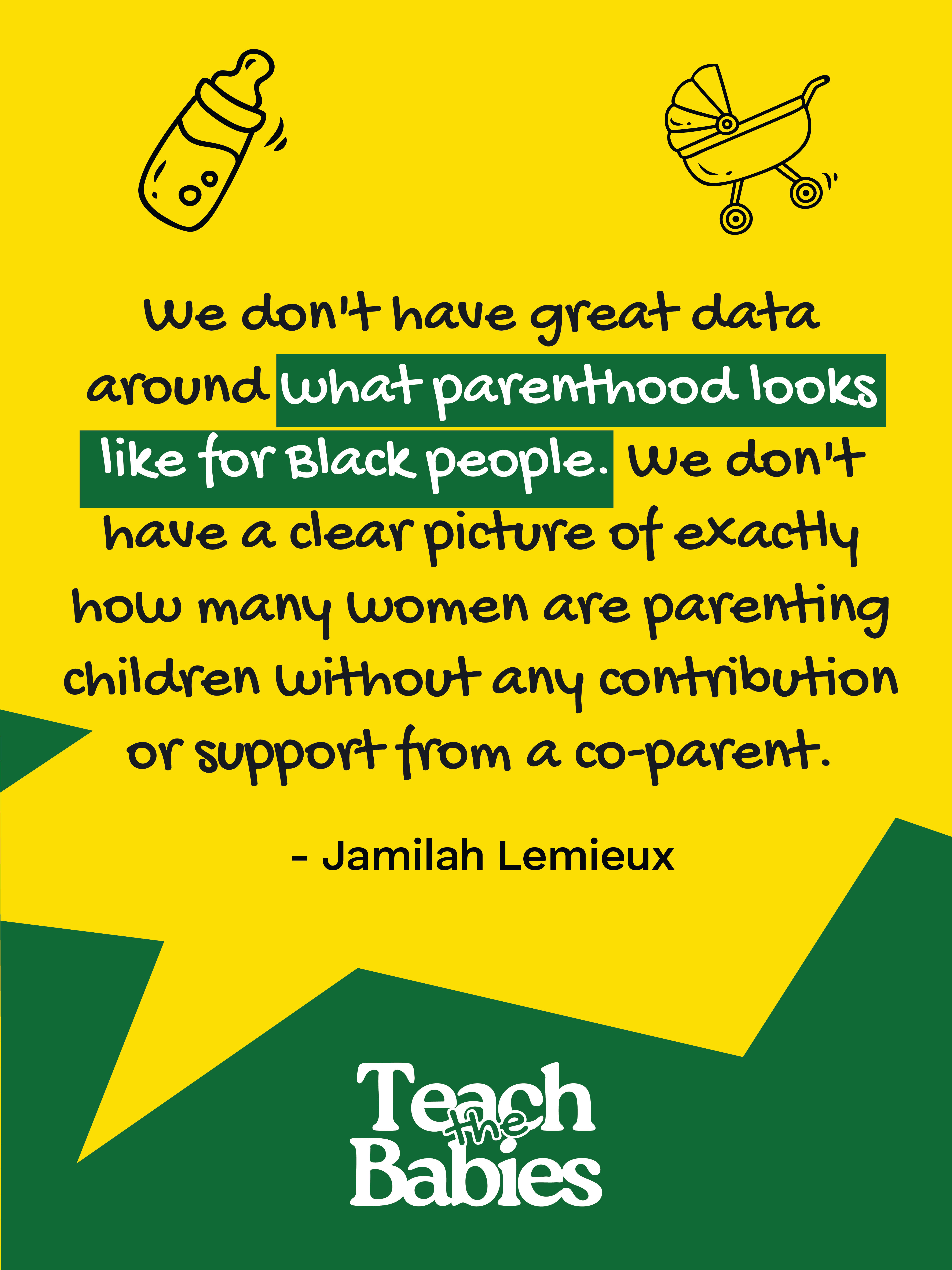
We don’t have a clear picture of how many women are parenting children without any contribution or support from a co-parent. We don’t have great data on what presence actually looks like—whether that’s school pickup and drop-off, bath duty, helping with homework after a drop-off, or showing up daily even when not the custodial parent. What we have are old studies that tell us Black fathers are the most active compared to fathers of other races, and we have a culture that has largely ignored that finding while amplifying every narrative that runs counter to it.
But then—and this is where Jamilah does something important—she doesn’t let us off easy with the data either. She asks: Is hands-on parenting a measure of devotion, or a measure of how capitalism distributes labor? If a father has less access to outside employment, he may do more of the physical work of childcare. That is real love. It is also real economics. Both things can be true. Both things require us to think more carefully.
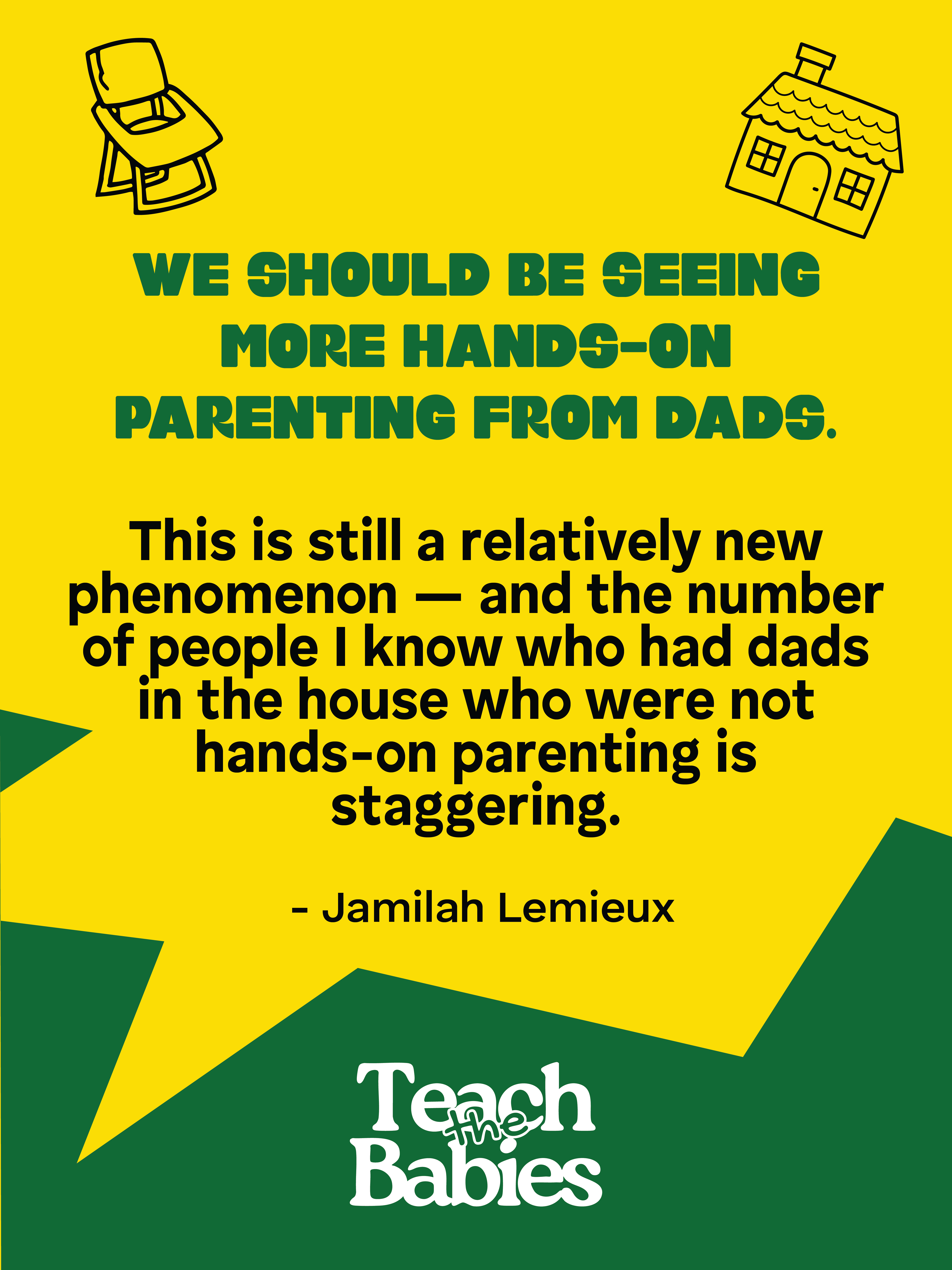
What she is clear about is this: every-other-weekend is not a relationship. It is a schedule. And we have normalized a floor that should be a starting point for a different conversation entirely.
“If you worked a job four days a month, do you really have a job? If you only saw your partner four days a month and you live in the same town—are you really in a relationship? It’s time for us to dream bigger than every other weekend.” — Jamilah Lemieux
I appreciate her for this. Not the shaming. The dreaming. The insistence that we can do better, should expect better, and should give ourselves permission to want better.
Break Up With the Idea. Please.
The most urgent line in the whole conversation might be this one. And I want to sit in it for a moment before we move on.
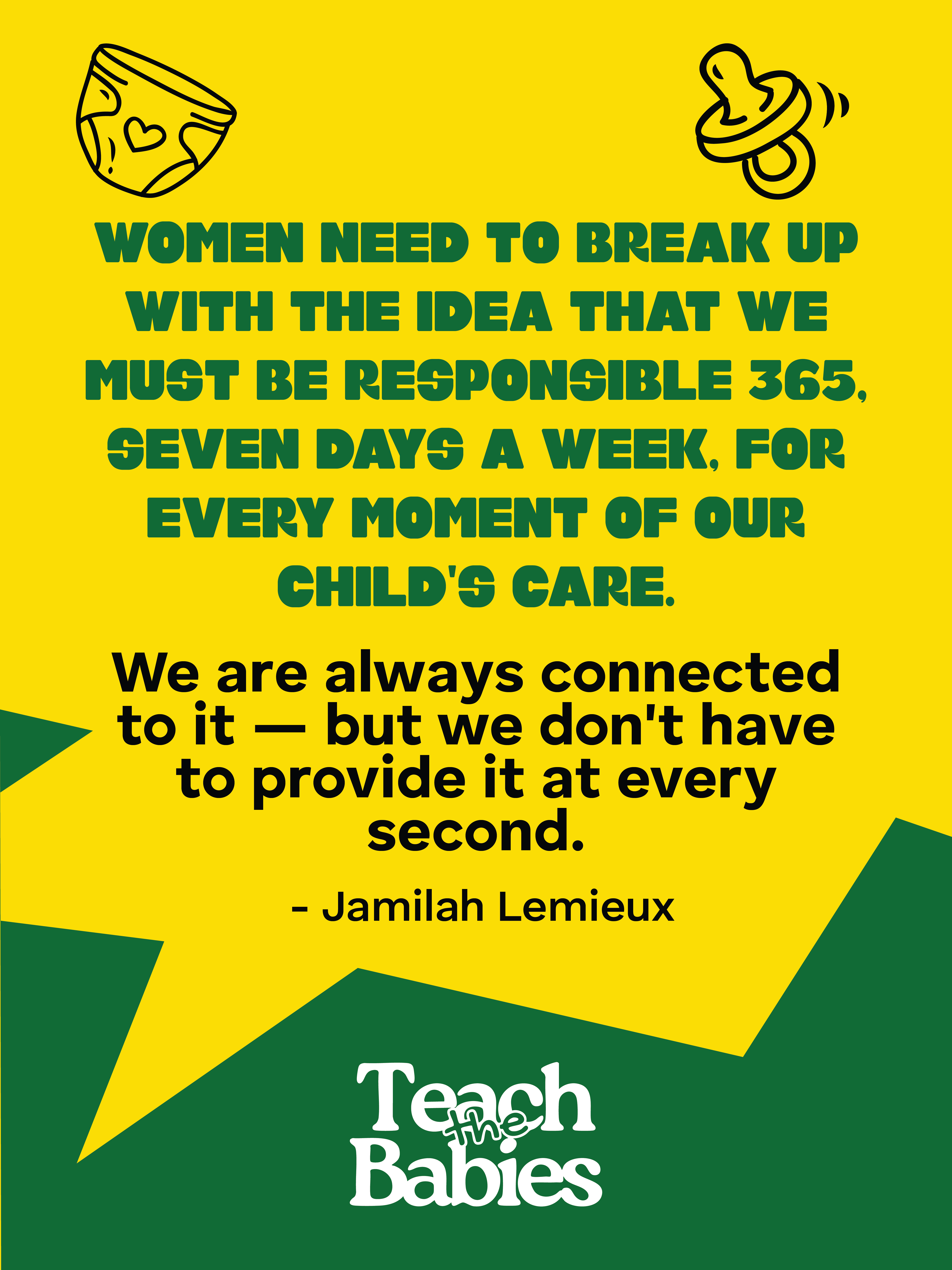
Jamilah is talking about the belief, deeply internalized by so many women—Black women especially—that they must be the sole, constant, uninterrupted provider of their child’s care. That to accept help is to fail. That to rest is to neglect. That to allow a capable, competent, safe co-parent to step fully into the work is somehow a diminishment of their role.
She calls this out as what it is: a lie we absorbed from a culture that has always needed Black women to give without limit and ask for nothing in return. The “Strong Black Woman” is not a compliment. It is frequently an excuse—a way to avoid building the actual infrastructure of care that would require something from the people around her.
Women were never designed to do this alone. Children were never designed to be raised independently. This is what I mean when I invoke African ancestral AI—not the tech-bro version, the original version: the village. The actual, literal, communal architecture of care that has sustained Black life through every assault this country has mounted against it.
We lost the village. We can build it back. But we have to want it badly enough to break up with the lie first.
This Is Personal to Me.
I thanked Jamilah via text after I finished the book. I want to say it here, too, where the class can witness it.
This book opened a conversation between my sister and me. A real one. About what it means for her to be a Black single mother—what she has carried, what she has built, what she deserves. We are close in age. We love each other. And still, this book gave us language we did not previously have to talk about her experience with the honesty it deserved.
That is what good books do. They do not just describe the world. They change the language available to us for living in it.
I also want to name something Jamilah said near the end of our conversation that I have not stopped thinking about. She grew up watching The Cosby Show and The Fresh Prince and feeling a low-grade insecurity about the shape of her family. But she realized, recording the audiobook, that she did not feel that way watching Good Times. Both were nuclear families. What she was actually envying in the Huxtables and the Banks was not the structure—it was the money. And it made her wonder: what would this book have looked like if her mother had been an upper-middle-class Black single mom?
That is the question this book is asking underneath all the other questions. And it is one of the most important. I pray you sit with it too.
What the Village Is Owed.
Near the end of our conversation, I asked Jamilah what she needs from people who read the book. Not what she hopes for—what she needs. Her answer was direct, and it was not small.
She needs people to share it. To gift it to the Black single mothers in their lives. To sit with it, even if the title feels intimidating, and especially if the word “feminist” in her reputation makes them want to look away. She told me the fear response to that word is worth examining in yourself. She is right.
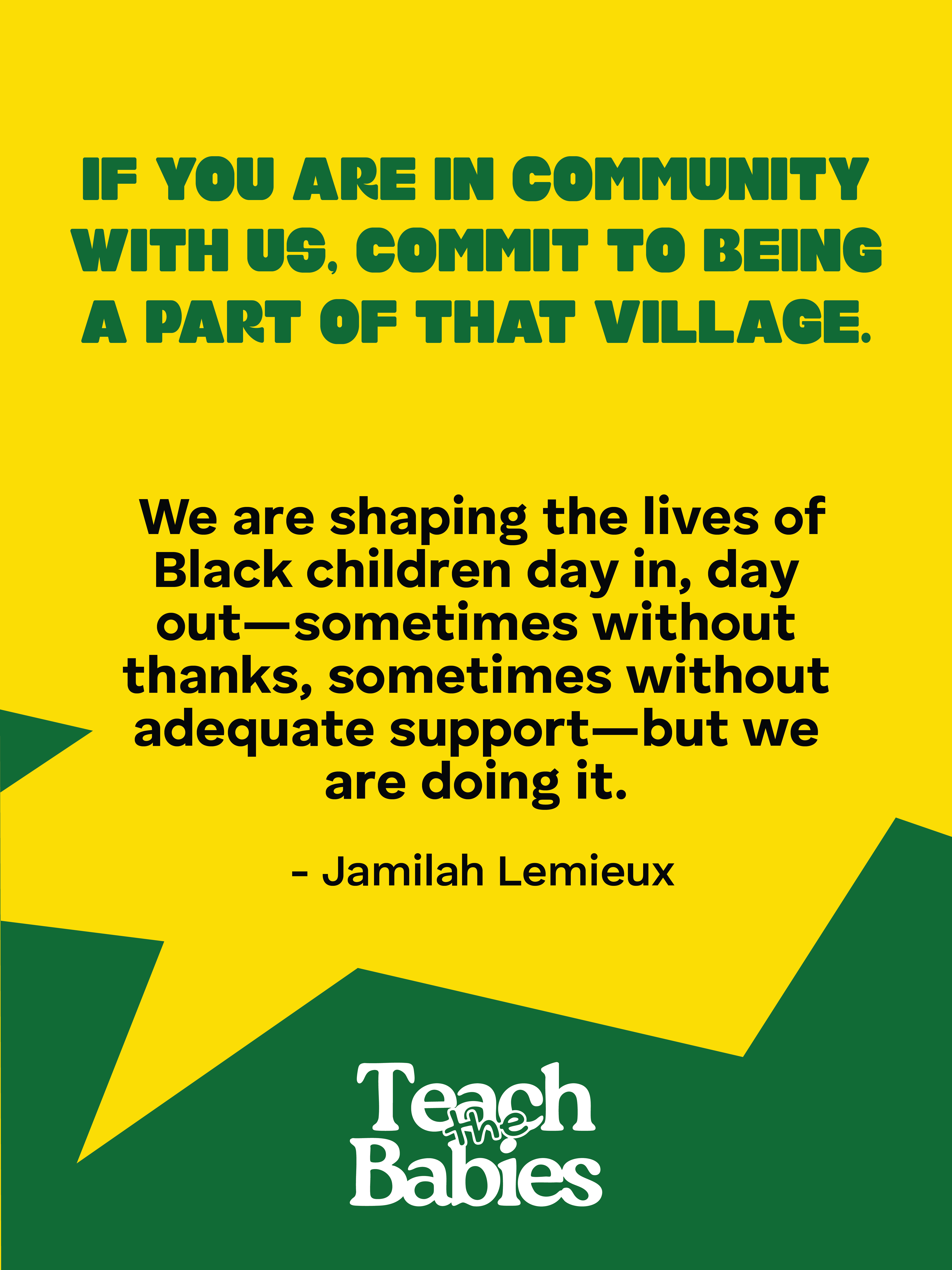
But the larger ask—the one underneath the ask—is this: commit to being part of the village. Not out of pity. Not as charity. As an understanding that the women shaping the lives of Black children day in, day out, sometimes without thanks and sometimes without adequate support, are doing communal work. And communal work requires a community.
“If you are in community with us, commit yourselves to being supportive of us and recognizing that we are an important force. We are shaping the lives of Black children. That is not something we do alone. It shouldn’t be.” — Jamilah Lemieux
I have learned some of the most important, instructive lessons of my life from Black single mothers. I will continue to find ways to honor that. I am asking the class to do the same.
Go Get the Book.
Black. Single. Mother. Real Life Tales of Longing and Belonging is available now wherever books are sold. Get it for yourself. Get it for the mothers in your life. Get it for the men who have something to unlearn. Get it because the truth it holds is the kind that changes the language you have available to love people better.
The full episode is live now. Listen, share, and bring somebody with you.
🎧 Spotify:
📖 Substack: https://open.substack.com/@drdavidjjohns
In love and continued struggle,
DJJ
#BlackSingleMother #JamilahLemieux #TeachTheBabies #LetsALLGetFree #AllBlackLivesMatter #BlackFeminism #TheVillage